


Understanding the Dominion Energy Franchise Agreement

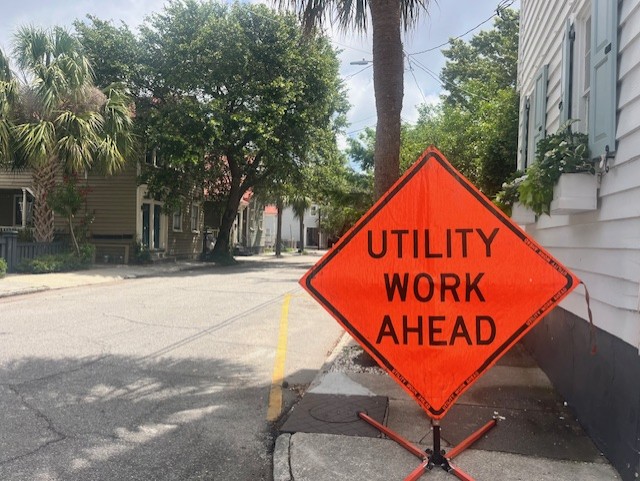
The City of Charleston is asking residents to weigh in on a proposed new franchise agreement with Dominion Energy, an agreement that will shape how electric and gas infrastructure is managed in our city for decades to come. If you recently received the City's survey and aren't sure what the agreement means or why it matters, here's a closer look at the key provisions, potential benefits, and important questions that remain unanswered.
Here is copy of the proposed franchise agreement.
Ask your questions here.
Understanding Charleston's Proposed Dominion Franchise Agreement
Because most people have never read a utility franchise agreement, it can be difficult to understand what is actually being proposed and what the long-term implications may be. Trust me, I understand!
This agreement will govern how Dominion installs, operates, maintains, repairs, and replaces electric, gas, and communications infrastructure within Charleston's streets, alleys, rights-of-way, and other public spaces. It would replace the City's existing electric and gas franchise agreements, which were executed in 1996 and expired in August 2026. City Council requested a 90-day extension of the current agreement while negotiations continued. We appreciate the extra time.
But now we are under the wire.
The draft agreement has already passed City Council first and second reading, and City Council recently held a public meeting to discuss its provisions and ask questions of Dominion representatives. Although residents were not given an opportunity for public comment at that meeting, the discussion provided valuable insight into the agreement's structure.
Why This Agreement Matters
Utility franchise agreements often receive little public attention, but they have significant implications for infrastructure, neighborhood character, resiliency, tree management, permitting authority, and the ability to underground utility lines.
The proposed agreement could remain in effect for as long as 30 years, making it one of the most consequential infrastructure agreements the City will consider in the coming decades.
Key Features of the Proposed Agreement
A Long-Term Commitment
The agreement establishes an initial term of 20 years and would automatically renew for an additional 10 years unless either party provides notice at least five years before the initial term expires.
Because of its length, the agreement will influence utility operations, permitting procedures, and infrastructure planning well into the future.
Franchise Fee Structure
Under the proposal, Dominion would pay Charleston an annual franchise fee equal to 5% of the prior year's residential and commercial electric and gas revenues generated within the city.
Payments would begin in July 2027. In exchange, the franchise fee would replace most other City licenses, permits, fees, and franchise taxes, with the exception of property taxes.
A Dedicated Undergrounding Fund
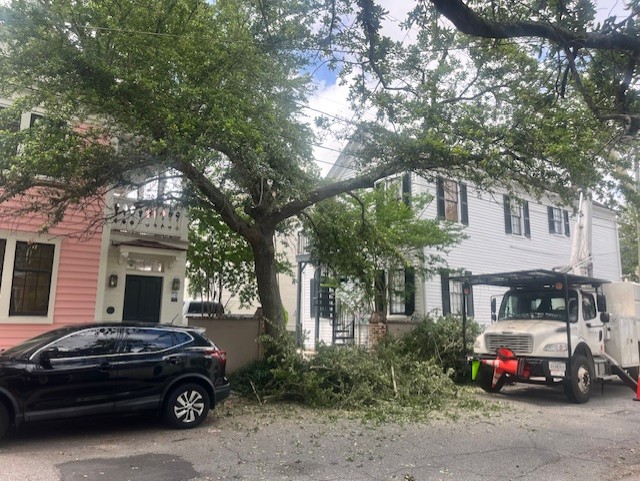
Perhaps the most notable feature of the agreement is the creation of a funding mechanism for underground utility projects and other non-standard infrastructure improvements.
Both the City and Dominion would contribute 0.5% of the electric revenue base used to calculate the franchise fee. Contributions would be matched dollar-for-dollar, creating a dedicated funding source for future undergrounding projects.
Each party's fund would be capped at approximately $5.7 million, representing about five years of contributions.
The City's funds would remain under City control, but implementation of projects would require significant coordination between the City and Dominion.
How Undergrounding Projects Would Work
The agreement outlines a detailed process for selecting and advancing undergrounding projects.
Key provisions include:
- The City establishes project priorities in consultation with Dominion.
- Reliability and public safety projects receive priority consideration.
- The project list is limited to ten projects.
- Dominion would actively design no more than two projects at one time.
- The City must secure necessary easements, rights-of-way, permits, and transformer locations before final pricing is established.
- Property owners may be required to connect to underground service through future ordinances.
- Projects that fail to obtain needed easements within six months would be removed from consideration and returned to City Council.
- Dominion must remove overhead facilities within six months of project completion.
- The City would be responsible for coordinating the relocation of telecommunications infrastructure and other third-party attachments.
While this framework creates a pathway for undergrounding, many implementation responsibilities appear to fall on the City, raising questions about staffing, funding, and administrative capacity.
Changes to Utility Permitting
The agreement would also significantly change how utility work is reviewed and coordinated in Charleston.
Dominion would operate under a standing General Permit that is reviewed annually. Work on the peninsula would be divided into four categories:
Emergency Work
Emergency repairs could begin immediately without advance permit approval, with the City notified after mobilization.
Routine Operations and Maintenance
Routine work would require advance notice only. The City would not be able to impose additional permitting requirements, provided lane impacts remain limited.
Short-Duration Projects
Projects lasting up to 14 days would require ten business days' notice. If the City does not object within the prescribed timeframe, Dominion could proceed.
Major Construction Projects
Larger projects would require coordination meetings and joint planning related to construction schedules, traffic management, and public communications.
The agreement also requires City departments to coordinate their reviews and avoid permitting processes that could delay utility work.
New Development Requirements
The draft agreement requires Dominion, upon City request, to provide underground electric service in new subdivisions consisting of 24 or more lots, subject to standard customer-funded construction charges.
This provision could encourage additional underground utility installations as new neighborhoods are developed.
Potential Benefits
Supporters of the agreement may point to several positive outcomes:
- A dedicated funding mechanism for underground utility projects.
- Improved coordination between the City and utility providers.
- Long-term infrastructure planning certainty.
- Additional funding for reliability and resilience improvements.
- Potential aesthetic benefits associated with undergrounding.
Areas of Concern
At the same time, several provisions warrant careful consideration.
The agreement limits the City's permitting authority in certain circumstances and commits the City to purchasing electric and gas service from Dominion where Dominion is the designated provider.
Questions also remain regarding who will be responsible for securing easements and managing the substantial coordination required for undergrounding projects.
Perhaps most importantly, the agreement establishes operational expectations that could remain in place for up to three decades. Given the pace of technological change, infrastructure innovation, and evolving community priorities, many residents may wonder whether such a lengthy commitment provides sufficient flexibility.
Additionally, the agreement does not reference the City's existing tree agreement with Dominion, raising questions about how vegetation management practices will be addressed moving forward.
Questions That Still Need Answers
As City Council considers final approval, several important questions remain:
- How does an undergrounding project get initiated?
- If available funding proves insufficient, can a greater percentage of the franchise fee be directed to the Undergrounding and Non-Standard Service Fund?
- What happens to undergrounding projects that are already in the queue?
- Will existing projects also be subject to the six-month easement deadline?
- How will residents be notified about vegetation management and tree trimming activities?
- Will amendments be needed to the City's Tree Agreement and Underground Utilities Ordinance to align with the new franchise agreement?
- Who within City government will be responsible for managing easements, rights-of-way coordination, and third-party utility relocation?
- Will the Underground Utilities Committee be revived to help monitor planned and recommend new projects?
Make Your Voice Heard
Take the City’s Survey (which is really just a google form asking for your questions)
The City is seeking public feedback through its survey process, and this is an important opportunity for residents to engage. The proposed franchise agreement will influence Charleston's streetscapes, resiliency efforts, utility infrastructure, and quality of life for many years to come.
Whether you support the agreement, have concerns about specific provisions, or simply have questions, now is the time to review the proposal and share your perspective. Long-term agreements deserve thoughtful public discussion, especially when they affect the public right-of-way and the future appearance and function of our city.