


The Fight to Preserve 211 Rutledge Avenue (Fuel Cantina)

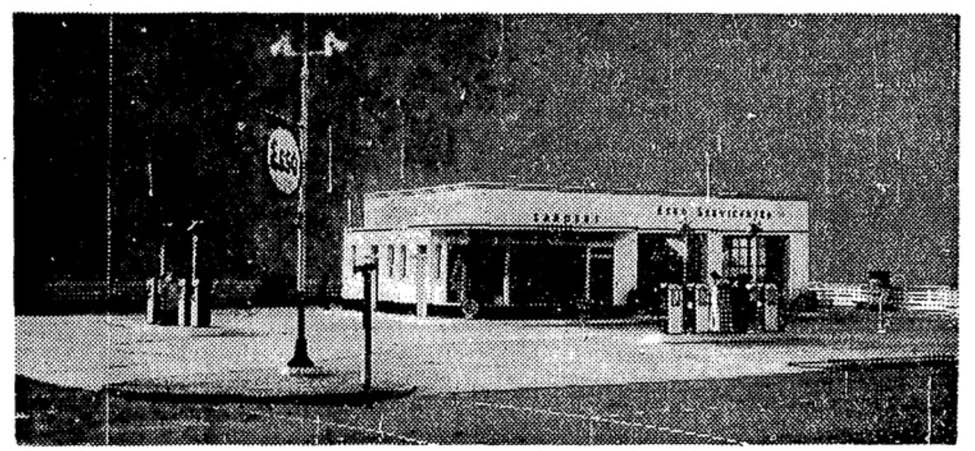
Whether the building at 211 Rutledge is worthy of protection has heated up in recent days. We believe this c.1950 former filling station, currently home to Fuel Cantina, is worthy of protection because of its age, form, context, and use.
Mid-century buildings are important components of Charleston’s architectural and cultural heritage. Former filling stations like this one reflect post-World War II growth, the rise of automobile culture, and new approaches to design and technology. Preserving these structures helps us understand how American cities and neighborhoods evolved during a transformative period. Just as we protect older historic homes or early commercial buildings (whether we like them or not), historic former filling stations deserve recognition for their role in shaping life, aesthetics, and urban patterns during that period in history.
Why should 211 Rutledge be preserved?
- Age: The gas station was built in 1950, which, whether you like to admit it or not, is historic. When a building is 50 years or older, it can be eligible for a listing on a local, state, or national register and is commonly deemed “historic.” The historic character of the building, although altered in some places, is almost fully intact. The openings and form of the building closely resemble what was constructed in 1950.
- Form: Constructed in 1950 in the Art Moderne style, the station features a curved corner and smooth stucco finish, characteristic of mid-century design. This style, with its setback from the street, highlights how early gas stations were designed for convenient automobile access and is architecturally significant. Although we do not advocate for new development that encourages automobile access, we do not want to erase the past. In fact, the proliferation of filling stations was a driver in the advent of the preservation movement in Charleston, and the remnants from that time remind us of our important history.
- Historic Context: While 211 Rutledge may not be the quintessential Charleston single house we often associate with historic preservation, it has historic and cultural value that merits protection. The building is tied to its neighborhood and its specific location, contributing to the unique character of Cannonborough/Elliotborough as outlined in the city’s Area Character Appraisal for this neighborhood. Preserving corner lots where corner stores and former filling stations once served the neighborhood are a vital part of maintaining the historic character of the neighborhood.
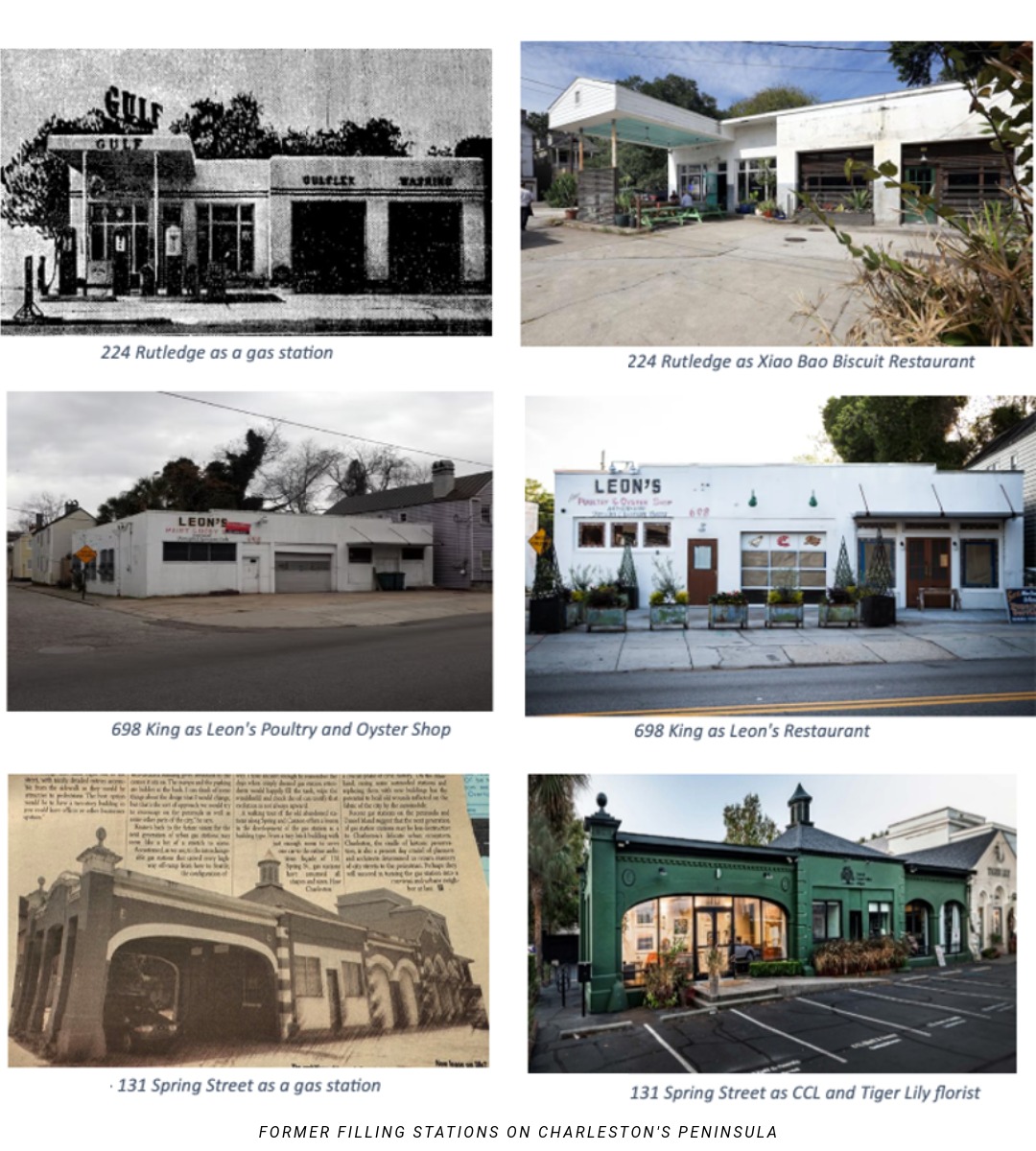
- Adaptive Reuse Potential: The structure serves as an excellent example of how historic buildings can be repurposed while retaining their original charm. Charleston has a long history of preserving fuel/service stations and allowing for adaptive reuse without altering the form/character of the building and lot. The Fuel Cantina has become a beloved gathering place because it is centrally located and has ample space around the building for dogs and recreation. Examples of other repurposed gas stations include the former Historic Charleston Foundation gift shop at 108 Meeting.
What is the immediate threat to 211 Rutledge?
As Fuel Cantina recently announced their intentions to close, developers are exploring redevelopment possibilities for the entire site. Plans submitted to the Board of Zoning Appeals-Z include moving the historic building to the corner of Cannon Street and Rutledge Avenue to make room for 7 multifamily units in 3 new buildings on the lot.
The variance request is for 1,708 square feet of lot area per unit. The current zoning code requires 2,250 square feet of lot area per unit. The consequence of this variance request, if granted, would be more density than otherwise permitted.
They’re also asking for a parking variance that would eliminate off-street parking for the commercial space (normally 10 spaces required) and reduce the apartment parking to 9 spaces (1 less than required). As a result, both commercial customers and some residents would likely rely on street parking.
This property is situated within the STR overlay, meaning these residential units could be used as short-term rentals and would not help alleviate the current housing shortage in the downtown area.
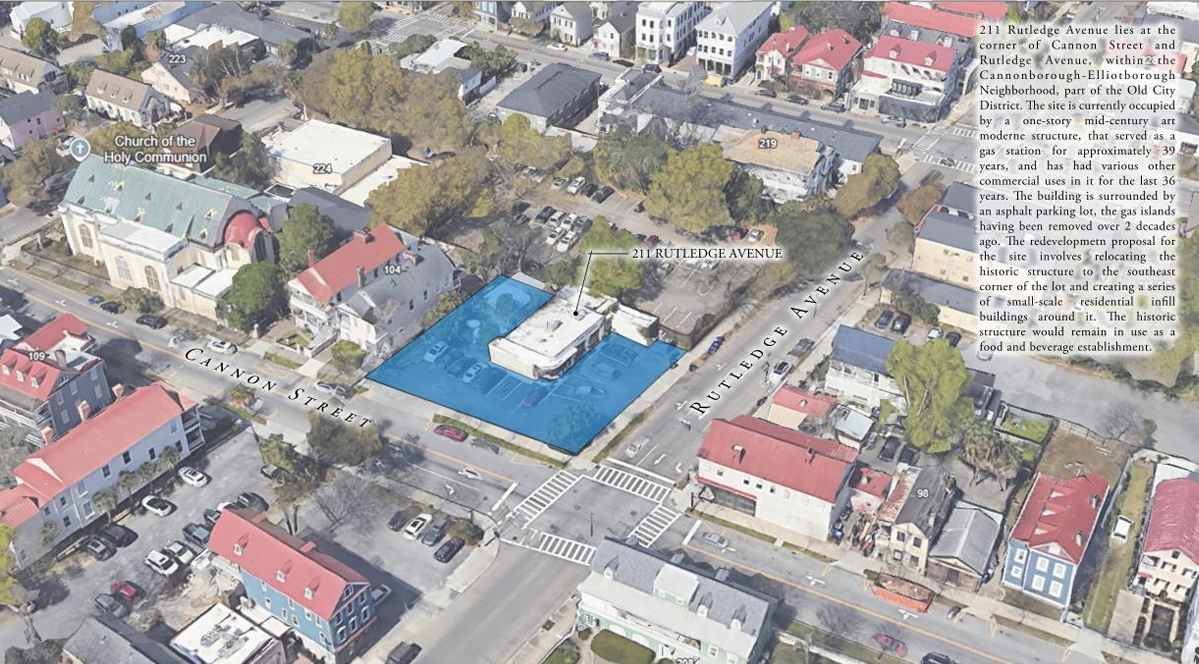
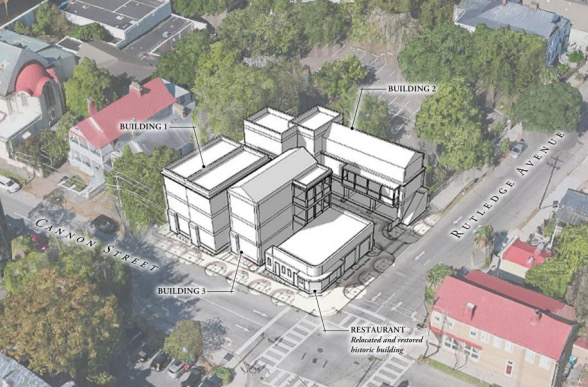
While the relocation of the filling station is not under consideration at this BZA-Z meeting, granting the requested variance would further enable the proposed development, which threatens the historic integrity of the site and allows for overdevelopment. HCF previously opposed the partial demolition of 211 Rutledge Avenue at a Board of Architectural Review–Small (BAR-S) meeting in October. That application was denied, but on January 8, 2026, the Board of Architectural Review-Small approved the relocation of 211 Rutledge Avenue. As a result, the current variance request has become even more significant, as it will determine the level of density that can be built behind the relocated one-story mid-century building.
What is the problem with moving the building to the corner?
Preserving this gas station in its original location offers a tangible snapshot of mid-twentieth-century life, one that would be lost if the building were demolished or moved.
National, state, and local guidelines emphasize the importance of maintaining historic spatial relationships, including placement on the lot. Moving the building would result in a loss of historic integrity and compromise key aspects such as location, setting, association, and feeling – critical for conveying the station’s historical significance and the full story of the neighborhood. While the building itself may survive a move physically intact, the story embedded in its placement, orientation, and relationship with the surrounding environment would be compromised. Moving a building creates an inauthentic historic narrative.
Preservation in its original, undisturbed location is the best way to maintain the full historic integrity of this historic filling station, ensuring that it continues to tell the story of how automobiles impacted Charleston and the preservation movement. The Cannonborough/Elliotborough neighborhood contains many twentieth-century gasoline stations, including on the corner lots of Rutledge and Ashley Avenues, and Cannon Street. These commercial buildings are a distinct architectural element that contributes to the overall character of the neighborhood. Many of them have been repurposed to serve as offices and restaurants.
More to know about 211 Rutledge
During the rise of motor culture in Charleston, many gas/service stations were built on corner lots for ease of access. The building currently on the site was known as Charlie Sanders’ Esso when it opened in 1950 and showcased mid-century modern design with rounded forms, horizontal lines, and glass panel windows—features that are retained today.
Through the decades, the building continued to evolve:
- 1956: Became Al’s Esso
- 1973: Owned by Exxon Corporation
- 1978–1991: Operated by Isiah Haynes until Hurricane Hugo caused closure
- 2000s: Briefly a cab stand and Welch’s Seafood
- 2011: Converted into Fuel Cantina, a retro fuel-themed Caribbean restaurant we all know today
- 2025: ????
What can I do to protect 211 Rutledge?
- Speak at the BZA-Z meeting next Tuesday
- When: January 20, 2026, at 5:15 p.m.
- What: City of Charleston Board of Zoning Appeals – Zoning
- Agenda Item #A-6 211 Rutledge Ave.
- 211 Rutledge Avenue, Cannonborough/Elliottborough
- Where: Public Meeting Room, First Floor, 2 George Street
If you cannot attend in person, you can submit written comments by 12:00 p.m. on Friday, January 16, 2026 ONLINE.
Stay connected with HCF on Social Media or SUBSCRIBE to our email alerts for the most up to date information. Use the comments below to ask questions and engage.