


Peninsula Plan Update

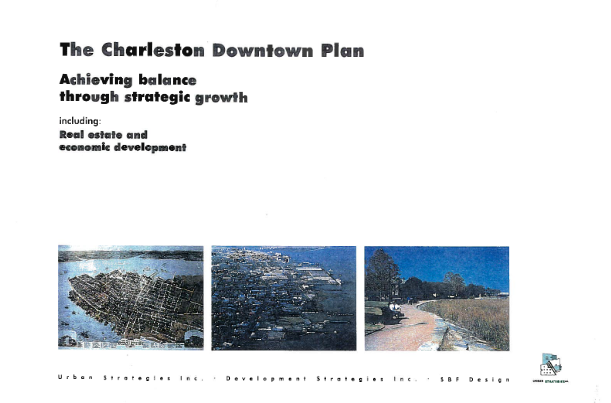
Our advocacy team recently met with City of Charleston planning staff to discuss the relaunch of the Peninsula Plan, which officially begins next week. The effort will build upon the vision established in the 1999 Downtown Plan while expanding its focus to include the Upper Peninsula and the Neck, making this a true Peninsula Plan rather than simply an update to the Downtown Plan.
The 1999 Downtown Plan has guided transportation, land use, preservation, and development decisions over the past 26 years. While Charleston has evolved significantly since its adoption, many of its core principles remain relevant today. This update presents an important opportunity to reaffirm that foundation while addressing the challenges and opportunities shaping Charleston’s future.
This effort is particularly significant because it is occurring alongside the City’s comprehensive zoning code rewrite. Rarely does a city have the opportunity to align long-range planning and regulatory reform at the same time. HCF believes the Peninsula Plan should establish a clear policy framework for future growth that can be directly translated into updated zoning regulations supporting the community’s goals.
City staff emphasized that they will build on the public outreach conducted over the past several years to build consensus and refine priorities.
Specifically, they aim to:
- Extend the existing framework to the Neck
- Coordinate key alignment projects into a cohesive master plan
- Develop a multimodal transportation framework
- Ensure the plan is action-oriented, with components such as:
- A tourism management plan
- A reexamination of Upper Peninsula zoning and height districts
Timeline
- Week of June 15: Briefing with neighborhood leadership
- July 9 – October 29, 2026: Weekly open studio hours and targeted stakeholder meetings
- Thursdays, 3:00–6:00 PM at the Civic Design Center, 85 Calhoun St.
- October – December 2026: Plan adoption process, including public presentations, an online feedback form, and public hearings
City staff expressed a strong commitment to public engagement and have offered to present to or meet with any interested audience.
Peninsula Plan Open Studio
The City of Charleston is hosting a series of Peninsula Plan Open Studio Hours on Thursdays this summer. Open Studio days provide the public with an opportunity to see work in progress and provide feedback before the complete draft of the plan is presented in October. All Open houses will take place Thursdays, 3:00–6:00 PM at the Civic Design Center, 85 Calhoun St.
Schedule
July 9: Soft Opening
July 16: Upper Peninsula & the Neck
July 23: Magnolia Landing
July 30: Lowcountry Lowline & Newmarket Creek
August 6: Safe Streets 4 All
August 13: Just Corridor
August 20: Public Art Initiative
August 27: LCRT
September 3: Project 3500
September 10: Battery Extension
September 17: Zoning Rewrite
October 1: Tourism Management
October 8: Tourism Management
October 15: TST
October 22: Open-TBD
October 29: Open-TBD
HCF Priorities
As the Peninsula Plan process moves forward, HCF will be advocating for a vision that promotes connectivity, resilience, livability, and thoughtful growth throughout the peninsula. While the planning process is just beginning, we believe there are several key issues that deserve particular attention as the City develops its framework for the next generation of transportation, land use, housing, and infrastructure investments.
HCF's initial Priorities:
- Street Ownership & Control
- A comprehensive map of current street ownership, along with a clear, prioritized strategy for returning ownership of streets to the City of Charleston to ensure local control over transportation and public realm decisions.
- Street Network Improvements
- Conversion of one-way streets to two-way operation, where appropriate, to improve connectivity, accessibility, and neighborhood vitality.
- Neighborhood Reconnection
- Reconnection of streets divided by mid-20th-century highway construction (e.g., Crosstown and Hagood Avenue) to restore neighborhood cohesion.
- Ferry Service
- A comprehensive plan for ferry service to expand transportation options and reduce pressure on existing infrastructure.
- Tourism Management
- Integration of tourism management recommendations into the Peninsula Plan.
- Neck Redevelopment Strategy
- An inventory of potential redevelopment parcels in the Neck, with a focus on connectivity and coordinated, efficient redevelopment.
- Building Scale & Form Controls
- Measures to curb incompatible, large-footprint buildings, including:
- Maximum footprint limitations
- Floor area ratio (FAR) restrictions
- Shared parking strategies
- Increased setback requirements
- Measures to curb incompatible, large-footprint buildings, including:
- Parking Policy Reform
- Establishment of parking maximums—particularly in commercial zones such as the Upper Peninsula—in place of minimums to reduce excessive parking and oversized building footprints.
- Missing Middle Housing
- Incentives to support “missing middle” housing types.
- Zoning Incentive Reform
- Review and updates to incentive-based zoning in MU-WH and Upper Peninsula districts to ensure that additional height and density deliver commensurate public benefits.
- Transit-Oriented Development (TOD)
- A TOD framework that aligns with CARTA investments and Lowcountry Rapid Transit (LCRT).
- Bicycle, Pedestrian, and Greenway Network
- A robust, interconnected network of bike, pedestrian, and greenway infrastructure throughout the peninsula, including connections to the future Lowline.
- Resilience & Sea-Level Rise
- Infrastructure planning that accounts for projected sea-level rise
The Peninsula Plan will play a defining role in shaping Charleston’s future for decades to come. HCF looks forward to continuing to engage throughout this process and working with the City, stakeholders, and residents to ensure the final plan reflects a shared vision for a more connected, resilient, and livable peninsula.
We encourage community members to stay engaged as the process moves forward and to share ideas that can help strengthen this important effort.
Share Your Input
Have additional ideas or priorities we should include?
Please reach out to HCF’s advocacy team, contact details are included below.
Director of Advocacy, Lisa Jones
(843) 329-4601 | ljones@historiccharleston.org
Preservation Planner, Kate Dutilly
(843) 720-1190 | kdutilly@historiccharleston.org