


How to Date... Historic Building Materials

.jpeg)
With Valentine's Day upon us, it seems like the perfect time for historic preservation groups to start talking about dating… materials, that is. When you're looking at a Charleston building for the first (or hundredth) time, how do you know for sure it is historic?
One approach is to look closely at the materials the building is made of. The key? Look for irregularities.
Reading the Story in Charleston's Historic Brick
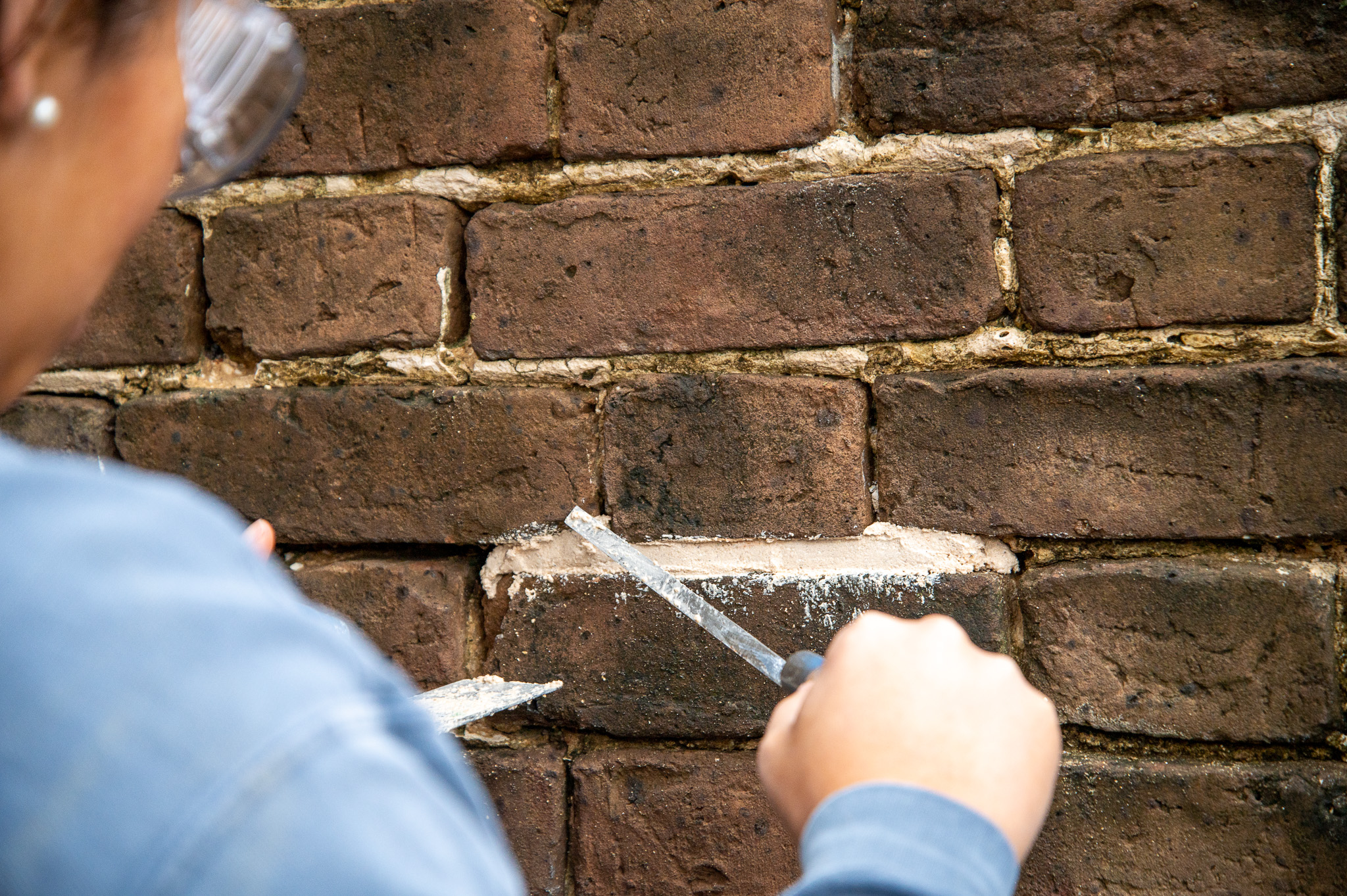
Brick has evolved significantly over time Early Charleston brick was made locally on several plantations nearby. These bricks were made by hand, using local clay and handmade wooden molds. As a result, these bricks are slightly irregular in shape, smaller in size, and often have black spots from the flame when the brick was fired. If you look closely, you will see that these bricks often still hold the fingerprints from the hands of those that shaped each individual brick: the hands of the enslaved men, women, and children.

Once you start looking for a fingerprint, you’ll see them everywhere. There are several stunning examples at the Aiken-Rhett Kitchen House—there's even a paw print in one of the doorways. These bricks are more than just building materials; they're tangible connections to the hands that shaped Charleston’s architectural fabric, both free and enslaved.
Don't Forget the Mortar
While looking at bricks, be sure to take a close look at the mortar holding them together. Early mortar was made using lime and aggregate (often sand), and you can actually see the aggregate particles suspended in it. Sometimes you will find crushed shells in the mortar as the aggregate. This historic mortar is soft, and therefore compatible with the soft handmade historic bricks. Just as the manufacturing process of bricks was modernized in the mid 19th century, the mortar manufacturing process was also modernized. Portland cement has been manufactured in the US since the 1871 and was widely used by the 1880s. Portland cement has a much smoother consistency, color, and texture than the hand-mixed historic mortar. It is also very hard. It is compatible with modern bricks, but with Charleston’s soft historic bricks, portland cement mortar will cause the bricks to deteriorate more quickly. Portland cement is what one of my professors aptly called “historic brick's greatest enemy”.
If you see a building with standardized bricks and portland cement mortar, it was likely constructed after the 1890s, making it an excellent dating tool for Charleston’s historic buildings.
Windows to the Past: Dating Historic Glass
Another telltale sign of a building's age is the glass used in its windows and interiors. Like brick, early handmade glass contains beautiful irregularities that can look like bubbles or waves that catch the light. Early glass was known as “crown glass” and featured a pontil mark where the blown glass was finished and straightened. The center of the crown was called the bull’s eye.
As early glass deteriorates, it transforms, and those changes are noticeable to the naked eye. For example, on a front entry door at the c.1808 Nathaniel Russell House, you'll notice something called "crizzling" which is when the glass becomes hazy as the materials start to break down.

As glass manufacturing industrialized it became increasingly uniform, larger glass sheets could be made, and the technology grew more sophisticated. In 1902, technology improved to enable the production of sheet glass, which is flat and very smooth. Modern “float glass” was invented in 1959, enabling the precision in thickness and appearance that we see in glass today.
Glass technology continues to evolve, think of the glass on your car windows—not only is it manufactured to break a certain way for safety, but it also offers UV protection our ancestors couldn't have imagined.
Want to Learn More About Dating Historic Materials?
If you'd like to deepen your knowledge of dating building materials in Charleston and beyond, there are some excellent resources available to the public.
- The Chesapeake House, written by Carl Lounsbury, is cited by preservationists everywhere.
- Cloverfields Preservation Foundation in Maryland also has fantastic YouTube videos on how to date different materials HERE.
So this Valentine's Day, why not take a romantic stroll through Charleston's historic neighborhoods with fresh eyes? You might just fall in love with the stories these materials have to tell.
Looking to learn more about historic preservation in Charleston? Follow Historic Charleston Foundation for more insights into the architectural treasures that make our city unique.