


Charter Day 2026 Award Winners


Historic Charleston Foundation is proud to announce the 2026 Charter Day award winners, recognizing outstanding achievements in the protection, restoration, and interpretation of Charleston’s historic built environment. This year’s honorees represent a diverse range of projects, from meticulous residential rehabilitations and institutional restorations to cultural landscape preservation and innovative public advocacy. Historic Charleston Foundation is grateful for the way they embody the spirit of preservation in Charleston, bringing not only technical expertise to caring for landmark buildings and places but also vision, dedication, resources, and a shared commitment to our city’s enduring legacy.
The Awards:
- Joseph H. (Peter) McGee Advocacy Award: In 2023, HCF created the Joseph H. (Peter) McGee Advocacy Award, named for past HCF Chairman and nationally-recognized preservationist, Peter McGee. This award recognizes citizens who devote time, energy, and passion into preserving significant historic places or advocating for public policy that advances the principles of historic preservation, excellent urban design, and community planning.
- Stoney Craftsmanship Award: The Stoney Craftsmanship Award recognizes craftspeople who have kept alive Charleston’s tradition of excellence in the building trades.
- Whitelaw Founders Award: The Whitelaw Founders Award recognizes individuals, groups, or government entities that actively engage in the long-term preservation of important buildings and places.
Whitelaw Founders Award Winners:
The Bennett Rice Mill, SC Ports Authority (Landmark Preservation; GEL Engineering)
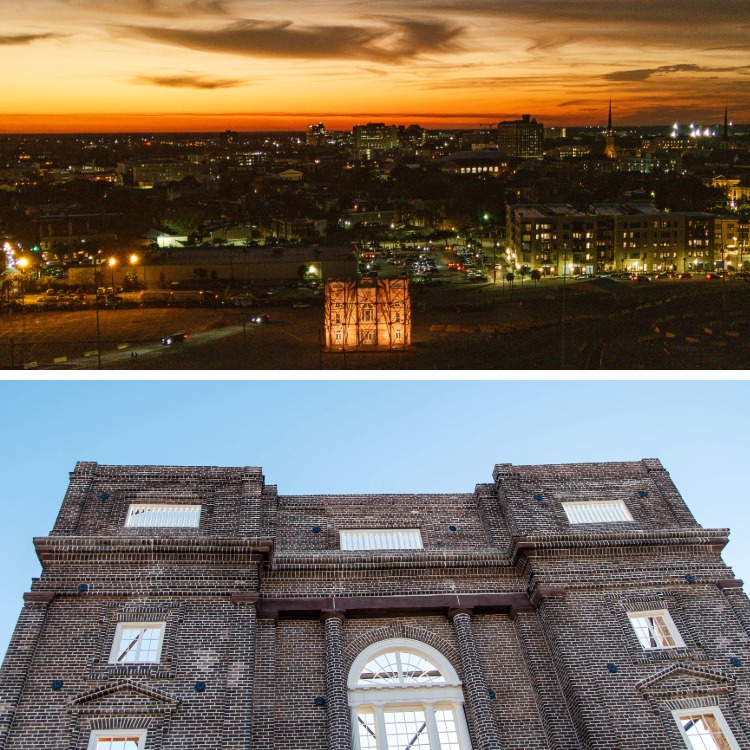
The Bennett Rice Mill at Union Pier is being honored for its remarkable stabilization and restoration of a fragile yet powerful remnant of Charleston’s industrial past. Dating to the mid-19th century, the surviving masonry wall stands as a rare physical link to the city’s once-dominant rice economy. Through a $1.6 million investment, the South Carolina Ports Authority partnered with Landmark Preservation and GEL Engineering to carefully assess, stabilize, and restore the deteriorating structure. Over more than a year of work, the team employed highly specialized preservation techniques to ensure the wall’s structural integrity while maintaining its historic character. As redevelopment of Union Pier continues, this project ensures that Charleston’s layered history remains visible—bridging past and future through thoughtful, place-sensitive preservation.
Congratulations to the project team: South Carolina State Ports Authority, Landmark Preservation, GEL Engineering
89 Smith Street (Mark Maresca, Owner)
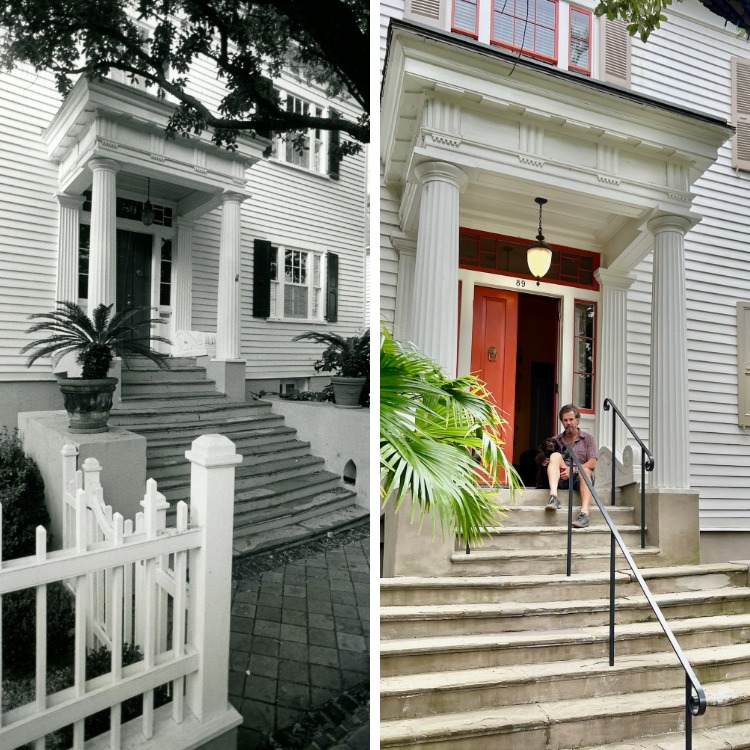
The rehabilitation of 89 Smith Street reflects a deep respect for architectural history and craftsmanship. Purchased in 2022 by architect Mark Maresca, the c.1840 Bennett-Jones House underwent a careful two-year restoration that prioritized original materials and design intent. Built in the Greek Revival style by Jefferson Bennett and later owned by renowned architect Edward C. Jones, the home features a striking Doric portico and distinctive polygonal bay windows blending Gothic, Roman, and Egyptian influences. Maresca’s work focused on restoring historic finishes while removing non-historic alterations, allowing the house’s architectural narrative to reemerge. The result is a thoughtful and academically grounded rehabilitation that honors both the building’s origins and its evolution, ensuring its preservation as a significant example of Charleston’s antebellum residential design.
Congratulations to the project team: Mark and Melissa Maresca, Meadors, Inc.
26 South Battery (Kevin Story & Stephanie Finch, Owners)
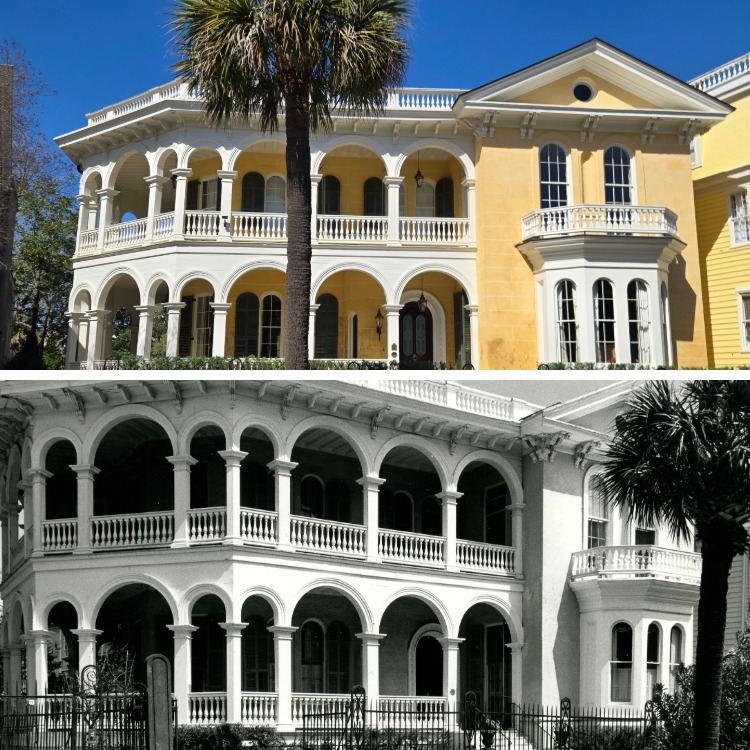
The restoration of 26 South Battery, the Col. John Ashe House, is a masterclass in patient, detail-driven preservation. Acquired in 2021, this c. 1828 Italianate residence underwent a multi-year, full-scale rehabilitation that balanced historical accuracy with the needs of a modern and growing family (two children were born during the course of the project). The undertaking, working with Richard Marks Restorations and Thomas & Denzinger Architects, entailed extensive plaster and stucco repair, piazza restoration, and the installation of a standing seam copper roof. A defining achievement was the painstaking return of the home’s exterior to its original limewash finish, complete with historically accurate color analysis and hand-restored detailing. Inside, original moldings, mantels, and decorative elements were carefully preserved or recreated using traditional techniques. Even landscape features were designed to echo the home’s geometry. The result is a cohesive and deeply respectful restoration that celebrates the building’s craftsmanship while ensuring its continued vitality as a lived-in historic home.
Congratulations to the project team: Stephanie Finch and Kevin Story (homeowners), Richard Marks Restoration, Thomas & Denzinger Architecture, Architrave Interior, Wertimer + Cline Landscape
60 Meeting Street (Jon Mazzoli, Owner)
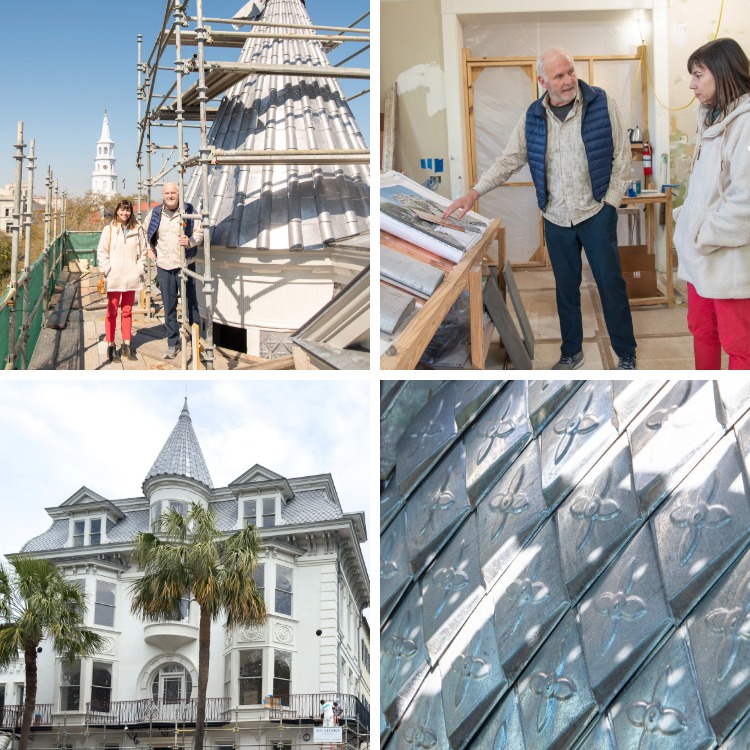
The rehabilitation of 60 Meeting Street highlights the successful integration of traditional building arts with advanced preservation techniques. Originally constructed in 1771 and later transformed in 1893 into a high-Victorian residence, the building presented a complex restoration challenge. Mazzoli worked with Meadors Inc. on a comprehensive interior and exterior rehabilitation, including the restoration of its distinctive mansard roof and turret using custom-fabricated metal tiles. Additional work included window restoration, stucco repair, and the modernization of building systems, all while correcting prior alterations that had compromised the structure’s integrity. The project stands as a model for how historic properties can be sensitively adapted while preserving the craftsmanship and character that define them.
Congratulations to the project team: Jon Mazolli, Meadors Inc.
60 Tradd Street (Dr. John Kerrison, Owner)
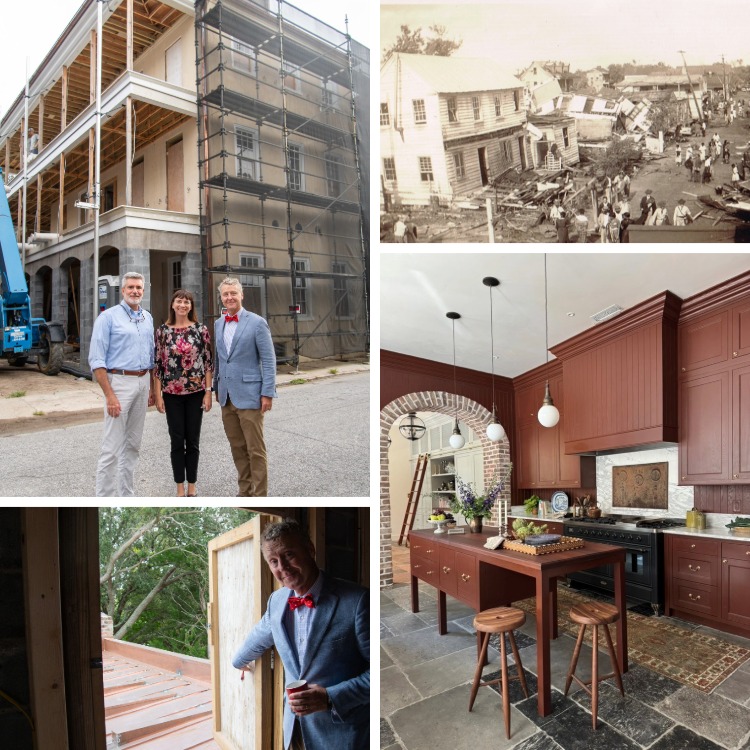
The project at 60 Tradd Street represents the power of research-driven restoration and multi-generational stewardship. Built circa 1732 and held within the same family since 1967, the home underwent a transformative effort to reconstruct its long-missing piazza—an architectural feature removed in the mid-20th century. Upon acquiring the property, Dr. John Kerrison, who grew up in the home, collaborated with architect Bill Huey and a team of engineers and builders to investigate the piazza’s original form using historic maps, photographs, and physical evidence embedded within the structure. The reconstruction required both technical precision and historical sensitivity, resulting in a structurally sound and visually authentic addition that reintegrates the house into its historic context. This project reflects a profound commitment not only to architectural integrity, but also to generational stewardship and Charleston’s evolving yet continuous streetscape.
Congratulations to the project team: Dr. John Kerrison (owner), Bill Huey + Associates, Matthew and Tim Gochanuer, Cochnauer Construction, Taylor Hill, Taylor Hill Designs, Glenn Gardner
Mosquito Beach (Cubby Wilder)
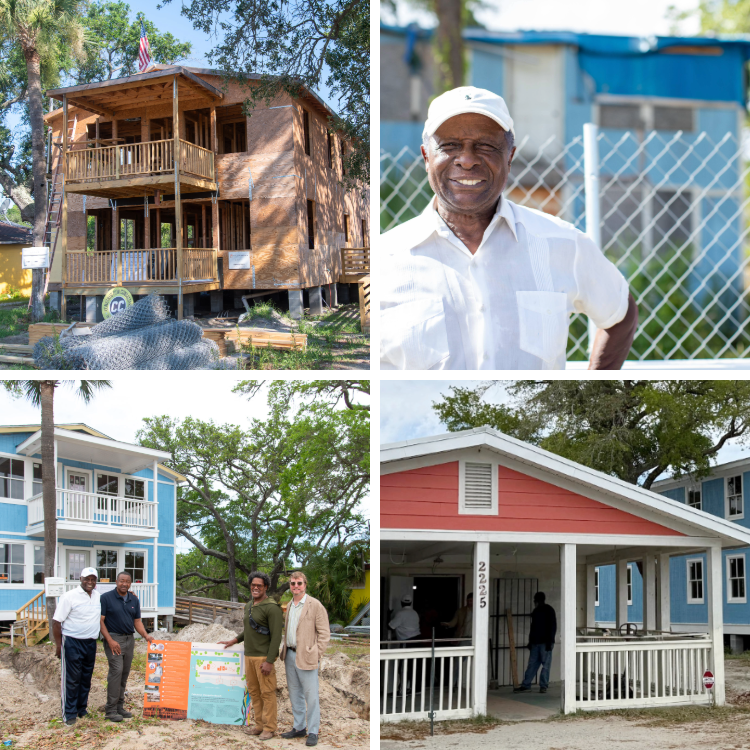
The Pine Tree Hotel and Skeeta Lounge at Mosquito Beach represents a vital investment in cultural preservation and storytelling. Supported by a $1.25 million grant from the Mellon Foundation and facilitated by Historic Charleston Foundation, the project seeks to restore these landmark structures to active use while honoring their significance as centers of African American leisure during the Jim Crow era. Extensive rehabilitation work, under the expert leadership of Cubby Wilder, Larry Graves, and Kyle Taylor, is nearing completion, alongside plans to revive the site as a destination that celebrates Gullah Geechee culture, foodways, and history. By pairing physical restoration with interpretive programming and operational support, this effort ensures that Mosquito Beach’s legacy is not only preserved, but also meaningfully shared with future generations.
Congratulations to the project team: Bill "Cubby" Wilder, Larry Graves, Kyle Taylor
St. Philip’s Church
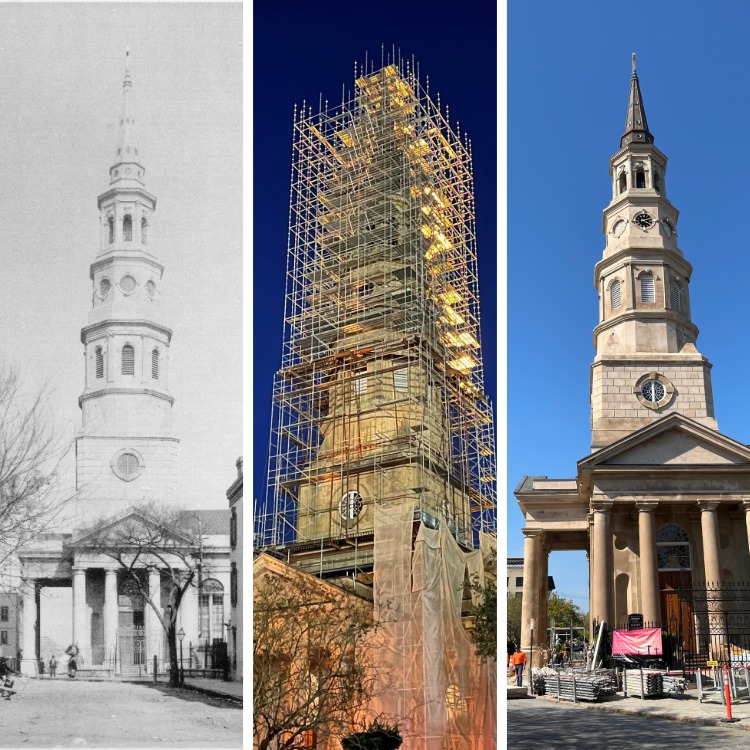
St. Philip’s Church is being recognized for its ambitious and comprehensive “Shine the Light” preservation campaign. Beginning in 2020, the congregation worked with Ryan Magee and Nathan Youngman of Magee Ratcliff Construction LLC and Eddie Porcher of Stantec, to undertake a wide-ranging initiative to restore the structural and aesthetic integrity of its historic campus, including the Sanctuary, cemetery gates, and primary entrances. As work progressed, the scope expanded to include intricate interior restoration, such as the repair of cast plaster ornamentation and the installation of discreet lighting to highlight architectural details. Entirely funded by the congregation, the campaign reflects a profound commitment to stewardship. The project not only preserves one of Charleston’s most iconic landmarks, but also reinforces its role as a living institution, welcoming thousands of visitors each year while continuing to serve its active faith community. According to Rector Jeff Miller, the congregation regards “these magnificent buildings as Gospel assets. The iconic steeple is a lighthouse to shine the light of Christ.”
Congratulations to the project team: Magee Ratcliff Construction, LLC (Ryan Magee and Nathan Youngman), Eddie Porcher of Stantec Consulting, UpSouth LLC, Glasgow Roofing, Canning Liturgical, Bell Foundry Christoph
Joseph P. McGee Advocacy Award Winner for 2026
Bill Olson

Bill Olson, a.k.a. “Charleston’s Civic Storyteller” wins this year’s Joseph McGee Advocacy Award for his community outreach, generating broad interest and engagement for preservation advocacy through digital storytelling. A local real estate professional and busy dad, Olson has built a substantial following by translating complex development, zoning, and preservation issues into accessible, fact-based video content. Via his Instagram presence @The.Bill.Olson and via YouTube, he creates relatable, sharable content, prioritizing clarity over commentary and empowering residents to engage thoughtfully with issues shaping their city. With tens of thousands of followers and over a thousand videos produced, his work has amplified public awareness around key preservation topics, from rezoning debates to demolition concerns. By encouraging informed participation and highlighting the importance of civic engagement, Olson has expanded the reach of preservation advocacy beyond traditional audiences, demonstrating the vital role of communication in shaping Charleston’s future.
Stoney Craftsmanship Award Winners for 2026
Jeff Emig

Jeff Emig is recognized for his exceptional craftsmanship in masonry, stucco, plaster, and tile, skills essential to the preservation of Charleston’s historic fabric. Having honed his expertise through years of work on significant projects, including the restoration of the Sottile Theatre, Emig has built a reputation for precision and dedication to traditional methods. His work is widely respected by peers and collaborators, who value his ability to execute complex restoration tasks with both technical skill and artistic sensitivity. By maintaining and advancing these specialized trades, Emig plays a critical role in ensuring that historic buildings are not only preserved, but authentically restored using the materials and techniques that define their character.
Picquet Roofing
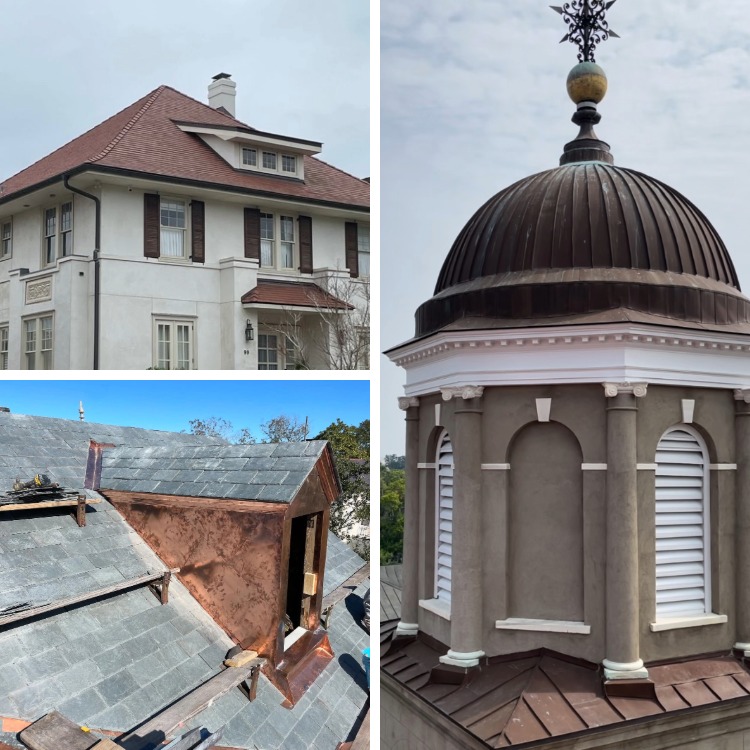
Picquet Roofing will receive the Stoney Award for their long-standing commitment to excellence in traditional roofing systems. Established in 1929, this third-generation, family-owned company is the oldest roofing firm in Charleston, carrying on a legacy rooted in craftsmanship and reliability. Specializing in materials such as copper, slate, tile, and metal, Piquet Roofing has contributed to the preservation of countless historic structures across the region. Their work reflects a deep understanding of both historic techniques and modern performance standards. By sustaining and elevating a highly specialized trade, the company continues to play an indispensable role in protecting Charleston’s architectural heritage.