


Another Federal Overreach: A Historic Preservation Safeguard is at Risk

What's at Stake for Charleston
For six decades, Section 106 of the National Historic Preservation Act has given communities an important opportunity to weigh in when federal projects could affect historic and cultural resources. Now, the regulations that dictate how the law is implemented are being rewritten to strip state, local and tribal governments of their voices.
Section 106 requires federal agencies (and the President) to consider the effects of their actions on historic properties and local communities. It provides opportunities for preservation organizations, local governments, Tribal Nations, state officials, and the public to participate in the process when cultural resources are concerned. It does not mean every project is stopped, nor does it guarantee that every comment will result in a change. It does, however, help avoid the accidental destruction of communities and resources by giving locals a seat at the table.
From major infrastructure projects to telecommunications equipment in the historic district (yes, this includes the infamous “toilet paper tower”), Section 106 has helped Charleston's preservation community have a forum to raise concerns, explore alternatives, and work toward better outcomes with the project leaders.
Now, that process could disappear.
Taking direction from President Trump, the Advisory Council on Historic Preservation (ACHP) is proposing a substantial revision of the regulations that govern how federal agencies carry out Section 106. On July 24, 2026, the ACHP voted to advance a draft Notice of Proposed Rulemaking. This means they formally got the ball rolling to make the revisions a reality. The draft is now moving through the federal interagency review process before it is published in the Federal Register for public comment.
What’s included in the proposed rulemaking:
- Federal agencies would no longer be required to actively seek ways to avoid or minimize damage to historic places.
- Consultation with state and local governments, Tribal Nations, and the public could be significantly reduced or made optional.
- Important cultural landscapes could lose protection.
- Agencies would not be obligated to consider broad impacts to historic resources, and could focus only on direct physical damage.
These changes raise an important question: What happens when fewer people have a meaningful opportunity to participate in decisions that affect the places they know and care about?
Section 106 in Action
Without the Section 106 review process as it exists today, several major projects in Charleston would have had significantly different outcomes:
Charleston Place:
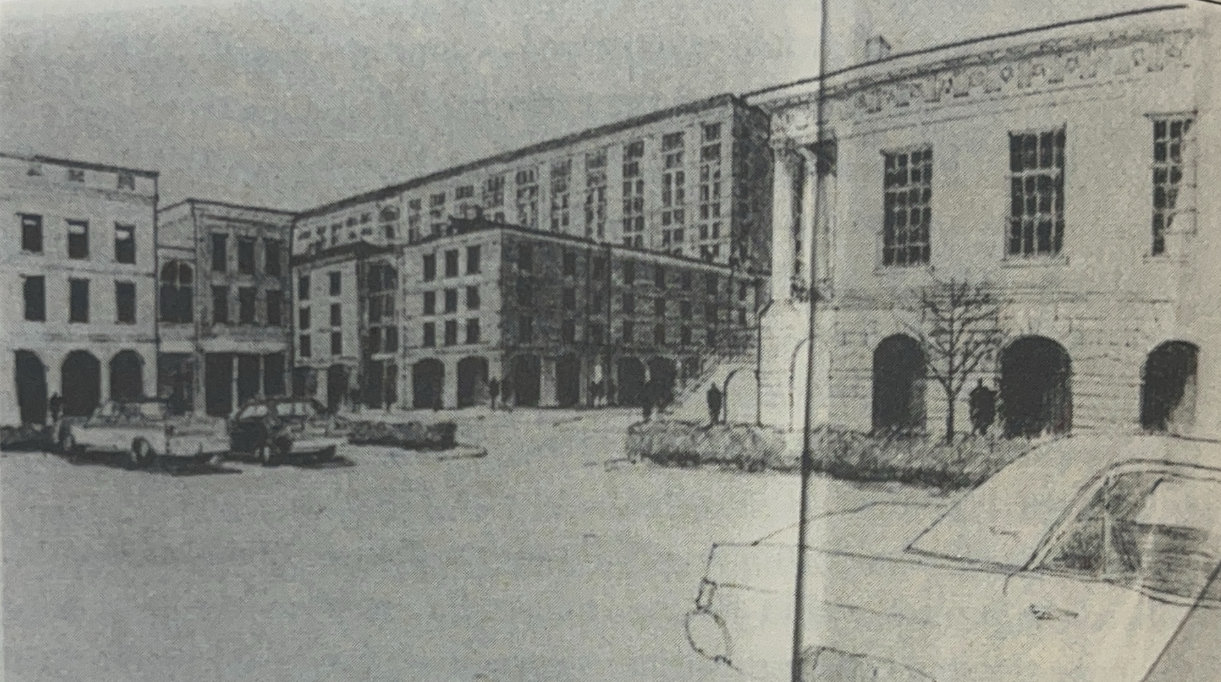
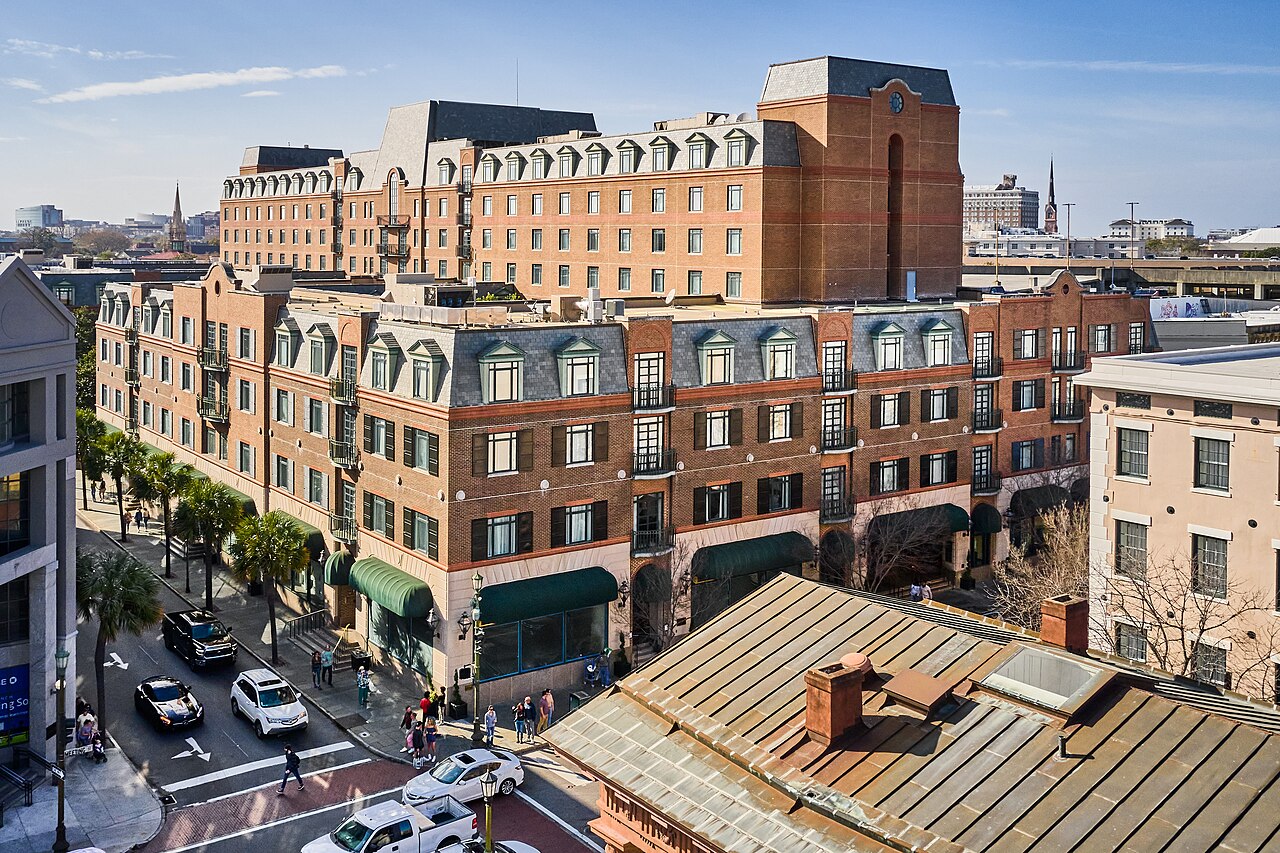
In the late 1970s, a proposal to build a hotel and convention center in the heart of downtown Charleston sparked a fierce debate over the balance between preservation and development. Initial plans called for a 419-room, nine-story hotel surrounded by a four-story perimeter structure at the former Belk department store site on King Street. As the proposal evolved, Historic Charleston Foundation and other community stakeholders weighed in on the design, with HCF recommending, among other things, a reduction in the number of hotel rooms. Because the City had received a federal grant to acquire land for the convention center and parking garage, the project was subject to Section 106 review, creating an opportunity for public consultation and allowing the Advisory Council on Historic Preservation (ACHP) to participate. Through that process, stakeholders acknowledged that the project would have an adverse effect on the historic district and worked together to identify mitigation measures. In July 1979, the parties signed a Memorandum of Understanding establishing those measures and allowing the development to move forward. The project demonstrates how Section 106 can bring stakeholders to the table, provide a meaningful opportunity for public input, and help find a path forward that balances development with the preservation of historic resources. As a result, Charleston Place today is 8 stories in height, lowered 4 stories from the previous design, and significantly reduced in scale and mass to better fit with the architectural character of the historic district.
James Island Connector:
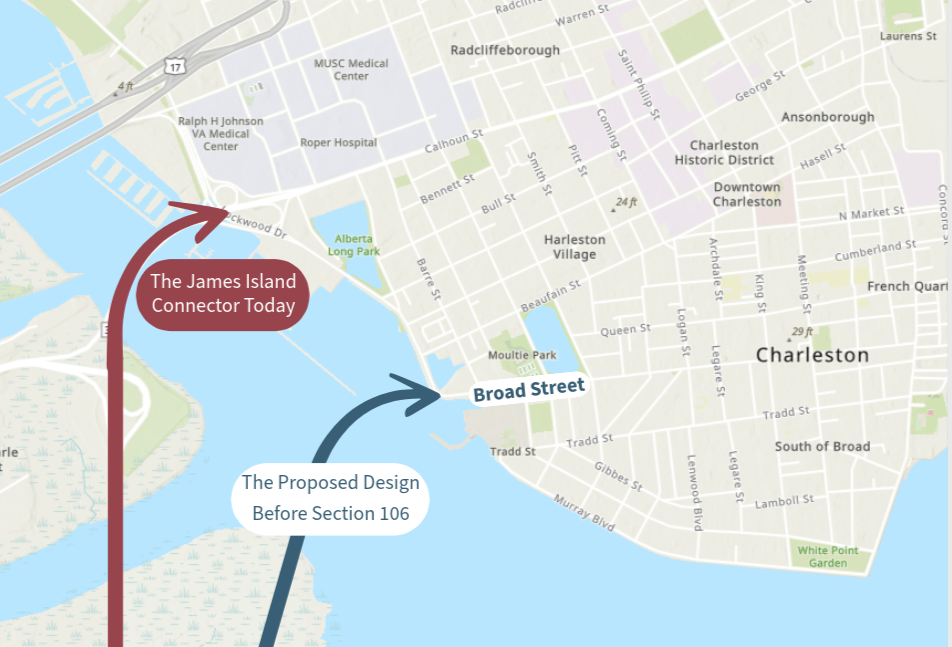
Transportation projects have enormous consequences for historic communities, and the James Island Connector provides a powerful Charleston example. The original proposal included an off-ramp onto Broad Street, which would have directed additional traffic into Charleston’s Old and Historic District and potentially affected its historic character. During the Section 106 review, officials raised concerns about the impact of this alignment and considered alternatives. The connector was moved farther north to connect with Calhoun Street instead of Broad Street, reducing the potential impact on the historic district while still providing an important transportation connection. Without Section 106 review, we would have 20,000 cars daily funneled onto Broad Street—in the heart of Charleston’s Historic District.
Charleston Courthouse Annex:
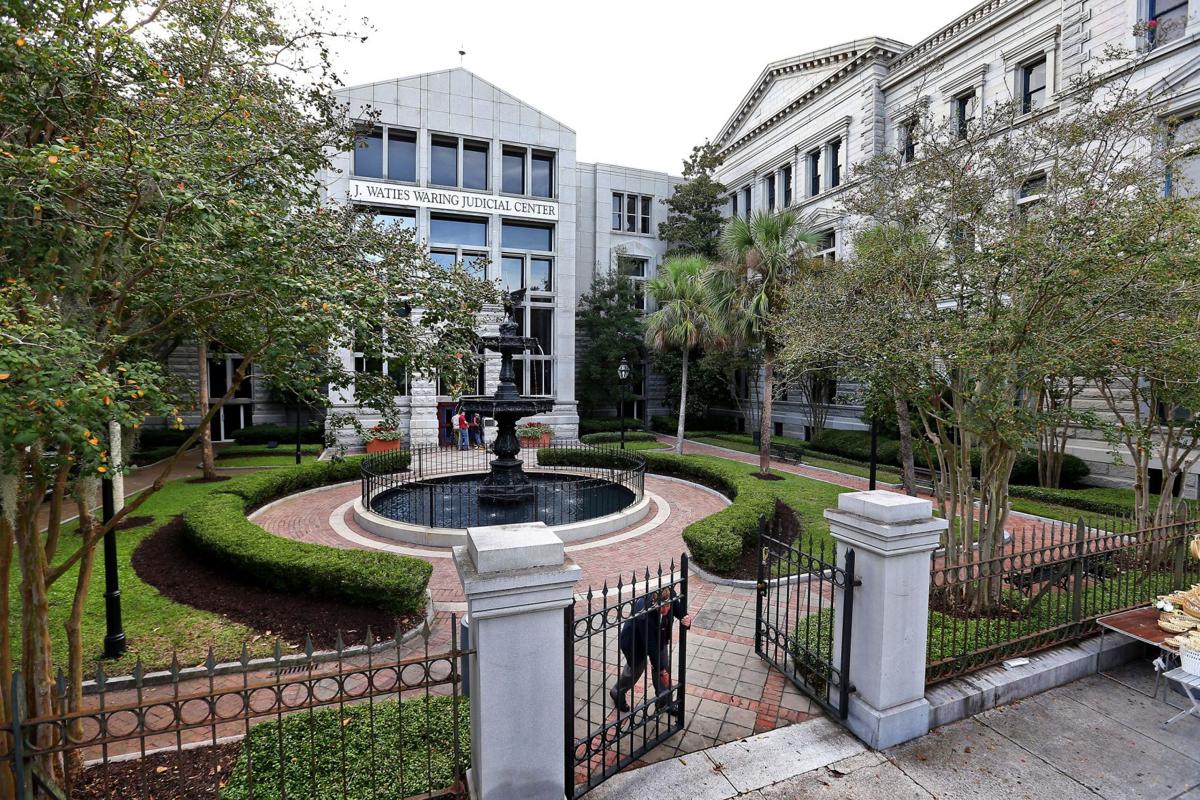
In 1980, When the General Services Administration proposed a large modern courthouse addition near Charleston's historic Four Corners of Law, Historic Charleston Foundation and other preservationists raised concerns about the project's potential effects on the surrounding historic district, including St. Michael's Church and the loss of park space. Through the Section 106 consultation process, the ACHP, preservation groups, government officials, and the public raised these concerns. Although GSA initially planned to continue with the original site, continued opposition led the agency to reconsider. The final plan preserved the park, changed the annex’s location and design, and screened it from the Four Corners of Law. Construction still moved forward, but with much less impact on Charleston’s historic character.
Battery Extension:
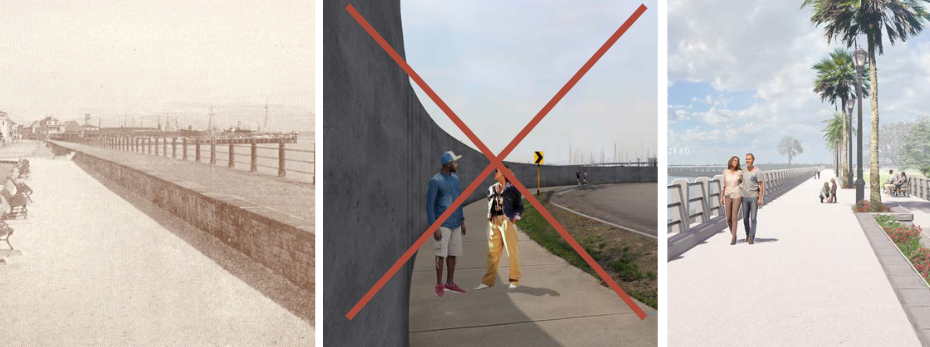
The Battery Extension provides a current example of why consultation continues to matter. Because of federal involvement, the project is subject to Section 106 review and consultation regarding its potential effects on historic properties and Charleston’s surrounding historic landscape. Historic Charleston Foundation and other preservation stakeholders are actively participating in the ongoing process to identify potential impacts, raise concerns, consider alternatives, and work with the project team to find solutions that address Charleston’s flooding needs while respecting the historic character of the Battery and surrounding landscape.
In summary:
The Section 106 review process in Charleston resulted in better outcomes!
- Charleston Place: The hotel would have been 12 stories, as opposed to 8.
- James Island Connector: The project would have included an off-ramp directly onto Broad Street, significantly changing traffic patterns and the surrounding historic district.
- Charleston Courthouse Annex: The annex would have been significantly larger and taken up a portion of the existing park space.
These examples demonstrate an important point: preservation is not simply about saying “no.” It is about asking questions before decisions are made. The process always leads to a stronger project for all parties.
Section 106 creates a forum for all of us to ask important questions. Could a project be designed differently? Could an impact be avoided? Is there an alternative location? What historic resources might be affected? How will a change alter the character of a neighborhood or cultural landscape?
Rather than discovering problems after a project is already underway, Section 106 provides an opportunity to identify them early, when changes and compromises may still be possible.
For Historic Charleston Foundation, maintaining that opportunity is critical. The voices of Tribes, states, local communities, and preservation organizations should continue to be part of decisions affecting our nation's historic and cultural resources.
Next Steps
The proposed changes to Section 106 are now under federal review, with additional opportunities for public input ahead.
Now: The proposed rule is under review by the Office of Information and Regulatory Affairs (OIRA). Interested organizations, governments, and stakeholders can request meetings with OIRA to share their concerns.
Coming Soon: ACHP is expected to publish a Notice of Proposed Rulemaking (NPRM) in the Federal Register, opening a public comment period. Your voice and input will be critically important at this time!
Historic Charleston Foundation and preservation partners across the state of South Carolina have signed a letter to the Governor expressing concerns about the proposed changes. We hope that Governor McMaster will be an advocate at the federal level—these changes negatively impact our state’s ability to participate, as well as those at the local level.
Read the letter here.
Want to take action now? You don’t have to wait for the public comment period to open. Write to your Governor today and let them know why protecting meaningful participation in the Section 106 process matters to you.
We’ll share more information about how to submit public comments once the comment period opens. Stay tuned for updates.